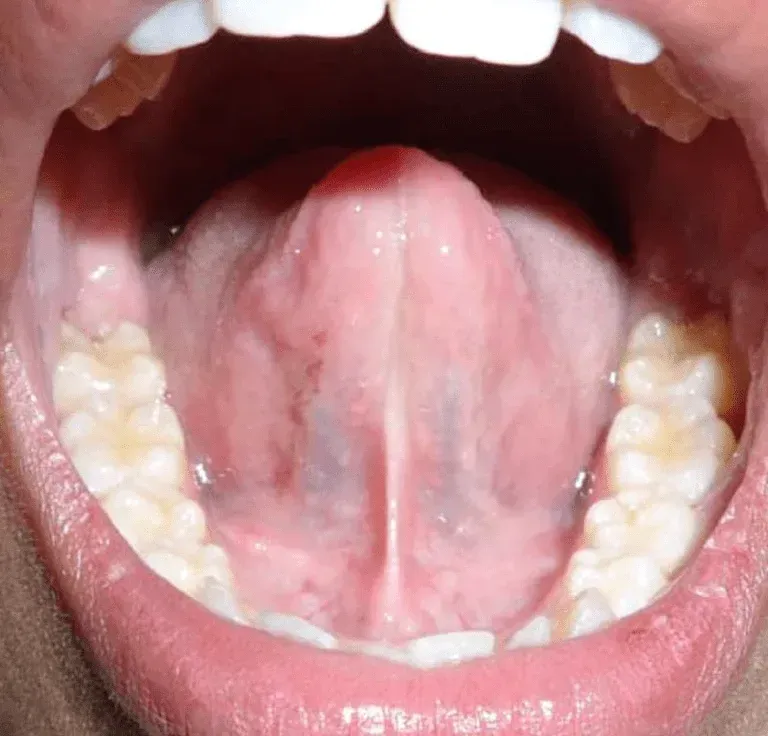
My Tongue Tie Journey | From symptoms to myofunctional therapy and finally a release
An Adult with a Tongue Tie: Symptoms, Myofunctional Therapy, and My Release Journey
Tongue ties are getting a lot of attention right now. More people are asking questions, researching symptoms, and wondering whether they, or their child might have one. At the same time, many still think tongue ties only matter during breastfeeding and infancy.
I’m sharing my story because my experience led me to see it differently.
I discovered I had a tongue tie as an adult.
My background is in dental hygiene, and I’ve worked in the dental field for over 10 years. During all that time, I had no idea I had a tongue tie. We may have briefly touched on it in school, but we certainly did not learn much about adult tongue tie symptoms or how restricted oral function can affect the body beyond infancy.
In 2020, when the world, I started exploring other paths within my profession outside of clinical dental hygiene, and that search led me to myofunctional therapy.
I was shocked to learn this field even existed, let alone that it was something I could pursue as a dental hygienist. My first thought was, Why didn’t they teach us this in school?
As I learned more, I realized how closely myofunctional therapy and airway health overlap with dentistry. We work with the mouth. We work around the airway. And many of the signs of poor oral function, myofunctional disorders, and airway issues were things I began recognizing not only in my patients, but in myself.
That realization changed everything.
During my myofunctional therapy training, I discovered that I had a tongue tie. I could not believe I had spent more than a decade in the dental field without knowing it. Looking back, I can now see signs of a tongue tie in adults that I had completely missed in myself for years.
Deciding to Have a Tongue Tie Release
I’ll be honest: it took me a while to convince myself that I not only had a tongue tie, but that I should do something about it.
What ultimately pushed me forward was this: if I was going to support other people through tongue tie treatment and recovery, I wanted to understand the process firsthand. I wanted to know what it felt like, what healing looked like, and how to better support patients walking through it themselves.
So I decided to move forward with a tongue tie release.
I connected with a local provider who was well known for this work, and she did a fantastic job. In fact, I still refer patients to her to this day.
The first week afterward was not pleasant. My tongue was sore, recovery felt tender, and it definitely was not the easiest experience. But after that first week, I started noticing meaningful improvements, and for me, it was absolutely worth it.
The symptoms I had experienced - many of which I had also seen in patients in my dental chair - included clenching and grinding, jaw pain and tension, headaches, neck and shoulder tension, shallow breathing, and poor sleep. These are not always the first things people think of when they hear "adult tongue tie," but in some cases they can be part of the bigger picture.
And when I say poor sleep, I mean I would wake at the slightest sound. I was a very light sleeper and a restless sleeper. At the time, I didn’t necessarily think of myself as someone who slept badly. But looking back, now that I know what better sleep feels like, I can clearly see that I really wasn’t sleeping well at all.
It still blows my mind that I was in my late twenties when I discovered this.
My mom had four kids and breastfed all of us without any issues, so there was never an obvious reason to suspect a tongue tie while I was growing up. But the more I learned, the more pieces of my history started to make sense.
I thought about the dark circles under my eyes that may have been connected to poor sleep. I thought about the way my jaw developed. I had braces, a lower jaw that sat back, and a deep overbite. I also experienced some relapse after orthodontic treatment. Once I understood more about myofunctional therapy, airway health, tongue posture, and tongue function, those pieces started to click into place.
One of the most interesting parts of this work is that people often report improvements in symptoms they never would have connected to the tongue in the first place. I’ve heard stories from people who felt changes in posture, breathing, body tension, or movement after treatment.
For me, one of the biggest aha moments came at the gym.
I was fairly active, and anytime I went down to the floor to do ab work, I would feel this tight pulling sensation in my neck and jaw. I assumed I was doing crunches wrong or compensating somehow. Then, a few weeks after my release, I did the same movement again and the difference was immediate. There was so much more ease. I didn’t have the same tension in my neck, and I didn’t have the same tension in my jaw. It simply felt easier.
That was one of the moments when I really felt how connected the body can be.
One way I make sense of it is by thinking about the body as an interconnected system. When there is restriction in one area, the body often compensates somewhere else. Over time, those compensation patterns can show up as strain, tension, and symptoms that do not seem obviously related at first.
A comparison I’ve heard and love is that it can feel like wearing a wetsuit that is one or two sizes too small. The body still functions, but it has to adapt. Muscles begin overworking, movement becomes less efficient, and over time those patterns can add up.
Of course, no one can guarantee a specific outcome from myofunctional therapy or a tongue tie release. But when someone has tried many different approaches and still feels like something is being missed, I do think this can be worth exploring.
Why I’m Sharing This
I want to be clear: I’m not here to convince anyone that they have a tongue tie, and I’m not here to convince anyone that they should have a release.
I believe in the value of shared experience. Sometimes hearing someone else’s story helps you ask better questions, do your own research, and make a more informed decision about whether something is worth exploring further.
Since becoming a mom, I see this whole topic through an even wider lens.
I truly feel for parents who are trying to navigate feeding issues, oral function concerns, airway questions, or possible tongue tie symptoms without enough support or informed providers around them. It can be incredibly frustrating to finally arrive at answers later on and realize that some of the early pieces may have been missed.
At the same time, I think it’s important to say this too: not every tongue tie needs to be released right away, or at all.
There are absolutely babies born with tongue ties who feed well, are growing well, are not especially tense, and whose moms are also doing fine. In those cases, there may be no clear reason to jump straight to a procedure. If there are no symptoms and function is good, it makes sense to be thoughtful rather than reactive.
But that does not always mean the conversation ends there.
As a child grows, the body may begin compensating in ways that are not obvious in infancy. Over time, those patterns can become more noticeable, and symptoms may start to show up later. That is why I think awareness matters so much. It’s not about fear. It’s about understanding function, knowing what to watch for, and recognizing when a deeper conversation may be needed.
The same is true for adults.
If you have been struggling with symptoms like headaches, jaw pain, clenching, grinding, poor sleep, or chronic tension for a long time - and if the approaches you have tried are only helping you manage those symptoms rather than truly improve them - then it may be worth looking more closely at myofunctional therapy and whether a tongue tie could be part of the picture.
I also want to point out that not every adult who explores this path ends up needing a tongue tie release. Some people make meaningful improvements with myofunctional therapy alone. That is why a proper assessment matters. It helps give a clearer picture of what is actually going on and what options make the most sense.
More than anything, I want people to feel empowered to advocate for themselves.
A lot of the adults who end up in my office are exhausted. They have tried many other options. They feel dismissed. Maybe their sleep study came back "fine," or maybe they have been told their symptoms are just something they have to live with. By the time they come in, they are often at their wit’s end.
I want those people to know there may still be other avenues to explore.
Yes, this path can be expensive. It can be time-consuming. It can ask a lot of you. But when you think about the quality of the life you still have ahead of you, even a meaningful improvement in how you feel can matter.
That perspective also shapes how I care for patients.
I care deeply about hearing what people are actually saying, not just listening for the answer I expect. I bring both professional training and personal experience with myofunctional symptoms, tongue tie symptoms in adults, and tongue tie release into the room, and that allows me to support patients with a level of empathy that is both personal and clinical.
And now, as a mom, that passion has only grown stronger.
Watching my daughter grow has made me even more committed to helping families better understand oral function, airway health, and the role tongue ties can sometimes play. Whether that means helping prevent future issues, reducing the need for more invasive intervention later, supporting someone through therapy, or simply connecting families with the right providers, my goal is the same: to help people feel seen, supported, and informed.
If sharing my story helps even one person connect the dots sooner, feel less alone, or ask a question they might not have asked otherwise, then it is worth it.
Thanks for reading my story.
- Jess