
Mouth Breathing: What’s the Big Deal?
Mouth Breathing: What’s the Big Deal?
Mouth breathing has become a bit of a buzzword lately. You might see posts online, hear your dentist mention it, or notice your own child sleeping with their mouth open and wonder:
Is this actually a problem?
How do I know if it’s “real” mouth breathing?
Does it really matter in the long run?
As a registered dental hygienist and orofacial myofunctional therapist, I see mouth breathing every day. Many practitioners still don’t look at it as an important clue, but more and more parents are starting to notice it and ask questions.
Let’s break this down in a simple, practical way.
(This post contains affiliate links. If you choose to purchase through these links, I may earn a small commission at no extra cost to you.)

What Is Mouth Breathing?
Mouth breathing is exactly what it sounds like: lips apart, breathing air in and out through the mouth instead of the nose.
The key difference is occasional vs habitual mouth breathing:
Occasional mouth breathing
Between sentences while talking
When you or your child is sick and the nose is stuffed
During heavy exercise
These episodes come and go. Once the cold clears or the activity stops, breathing returns to the nose.
Habitual mouth breathing
Mouth open at rest
Lips apart while watching TV, reading, or playing
Mouth open and/or snoring during sleep
The more often you see it, especially at rest or during sleep, the more likely it’s become a habit rather than a once‑in‑a‑while thing.
Why Does Mouth Breathing Happen?
There is rarely just one simple cause. Here are some of the more common reasons.
1. Learned habits
Kids copy what they see. If a parent, sibling, or caregiver is frequently mouth breathing, young children may simply mimic that pattern and accept it as “normal.”
Thumb or finger sucking can also encourage open lips and a low tongue posture, setting up an easy pathway into mouth breathing.
2. Allergies and chronic congestion
Allergies can create:
Inflammation inside the nose
Extra mucus
A feeling of “blocked” or stuffy nasal passages
When the nose feels hard to use, the body will choose the easier path for air: the mouth.
Congestion can also be linked to:
Certain foods that cause inflammation
Environmental triggers like dust, dander, or dry indoor air
Regardless of the cause, it’s important to look for the root reason behind the congestion and support nasal health so that nose breathing doesn’t feel like a struggle.
Simple Nasal-Care Tools I Recommend
Supporting nasal hygiene at home can make a huge difference in how easy nose breathing feels. Here are some products I often recommend in my practice:

For kids and adults
HydraSense Nasal Spray – gentle saline spray to help keep nasal passages moist and clear:
amzn.toNeilMed Sinus Rinse – a classic saline rinse system to flush out mucus and allergens (for older kids/teens and adults who can follow instructions):
amzn.toNeilMed Neti Pot – another option for saline rinsing if you prefer the neti pot style:
amzn.toXlear Nasal Spray (xylitol-based) – helps to reduce inflammation and bacteria in the nose, and many families like it for allergy season:
amzn.to
Specifically for little ones
HydraSense Spray – Infants – a very gentle option designed for babies:
amzn.toNeilMed Sinus Rinse – Kids – a child‑friendly version of the sinus rinse system:
amzn.toXlear Nasal Spray – Kids – formulated for children’s noses:
amzn.toNasal Irrigator for Baby (10 ml) – allows you to gently irrigate your baby’s nose under your control:
amzn.toOogie Bear – a simple tool to safely remove dried mucus right at the front of baby’s nose:
amzn.toFrida Baby Nasal Aspirator – a parent‑powered suction tool to clear deeper mucus when your baby can’t blow their nose yet:
amzn.to
Used appropriately, these tools can help keep the nose clearer so that nasal breathing feels easier and more natural, especially during colds and allergy seasons.
Other Common Causes of Mouth Breathing
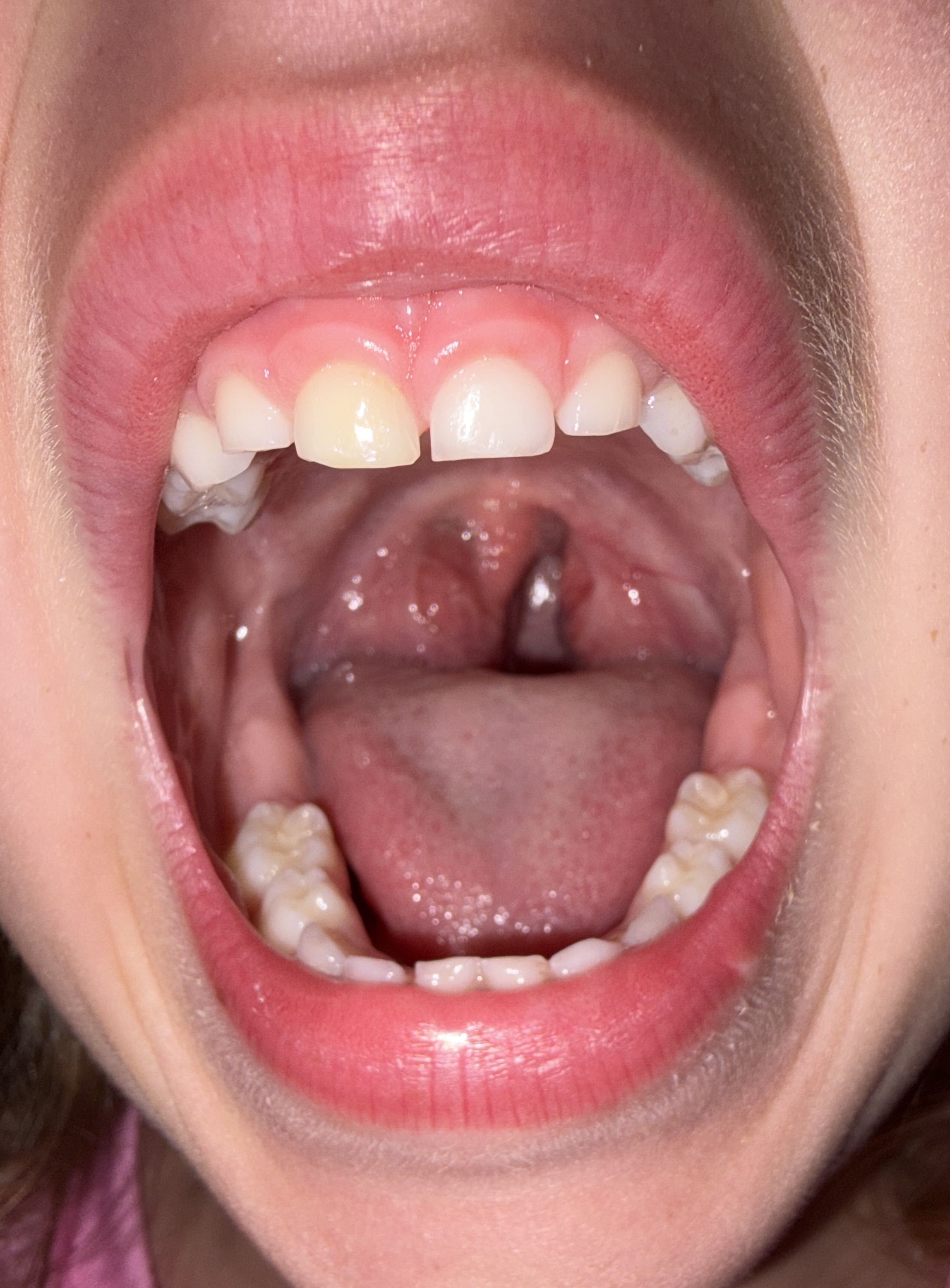
3. Enlarged tonsils and adenoids
This is a big one and unless your Doctor, Dentist or Dental Hygienist has mentioned it, many people don't even realize they are enlarged.
Tonsils sit at the top of the airway, behind the tongue.
Adenoids sit deeper in the nasal cavity and can’t be seen just by looking in the mouth.
If tonsils and/or adenoids are enlarged, they narrow the airway space. If a person already has a smaller airway to begin with, any extra blockage can make breathing feel harder.
When breathing through the nose feels like a lot of work:
The mouth drops open
The tongue falls down and back
Mouth breathing becomes the “easier” way to get air in
Remember, easier does not mean healthier. Over time, this pattern can create a ripple effect of other issues.
4. Low tongue posture
Your tongue has a “home” in the roof of your mouth.
When the tongue rests up against the palate, it actually makes it harder to breathe through the mouth.
When the tongue rests low in the mouth, the lips are more likely to fall open and the body defaults to mouth breathing.
Low tongue posture and mouth breathing often go hand in hand. Again, the important question is why the tongue is low: habits, tethered oral tissues, airway obstruction, or other structural factors may all play a role.
Why Is Mouth Breathing a Big Deal?
The list of potential impacts is long. I’ll highlight some of the main areas, and you might find yourself wondering if what you see in your child, or yourself could be connected.
1. Sleep quality and behaviour
Breathing strongly affects our autonomic nervous system, which has two main modes:
Sympathetic (“fight or flight”) – alert, on guard, stress state
Parasympathetic (“rest, digest, and relax”) – calm, repair, growth state
Mouth breathing tends to create shallow chest breathing, which keeps the body closer to that “on” fight‑or‑flight mode. People who mouth breathe often have higher stress and anxiety levels, and that alone can disrupt healthy sleep cycles.
At night, if we’re:
Mouth breathing
Tongue resting low
Jaw and tongue falling back with gravity
Possibly enlarged tonsils/adenoids narrowing the airway
…it becomes much harder to support and maintain an open airway and deep, restorative sleep.
If we don’t sleep well at night, we don’t function well during the day:
Adults might feel foggy, irritable, anxious, or “off.”
Children often don’t look tired, they look wired.
For some, this may resemble ADHD-like symptoms.
For others, it can show up as moodiness, anger, frustration and highly sensitive.
Before assuming “my child is just misbehaved” or “I’m just a moody person,” it’s worth asking: Have we actually been sleeping well?
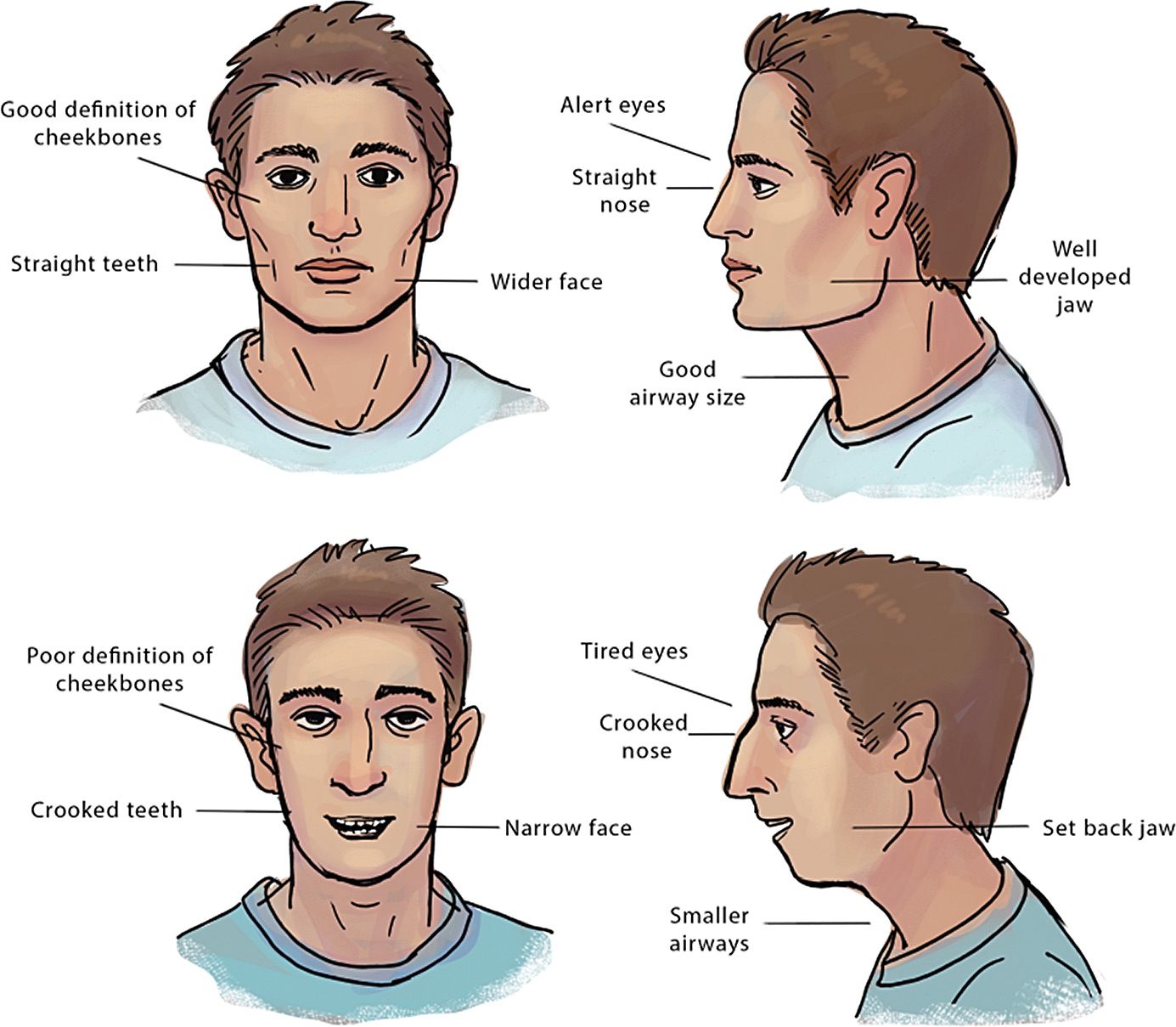
2. Facial growth and development
This is especially important for kids and has lifelong effects.
The tongue is a natural “guide” for jaw growth:
Tongue up and lips closed = gentle outward pressure on the jaws, helping them grow wide and healthy.
Tongue low and lips apart = inward pressure from the cheeks and lips, causing the upper jaw (palate) to:
Become narrower
Grow higher
Take up more space in the nasal cavity
This can lead to:
Narrow jaws
Crowded teeth
Reduced space for the tongue and airway
Orthodontics can absolutely help later, but prevention and early support often mean:
Less extensive orthodontic treatment
Lower long‑term cost
Fewer related symptoms
3. Teeth, cavities, and saliva
Narrow mouths often mean crowded teeth. Crowded teeth have tight contacts and are simply harder to clean. That alone can:
Increase cavity risk
Mean more dental visits
Increase dental bills
Now add mouth breathing.
Our teeth are meant to be bathed in saliva, which helps:
Neutralize acids
Wash away food particles
Remineralize enamel
When we mouth breathe, the oral tissues and teeth tend to dry out. With less protective saliva around the teeth, cavity risk goes up significantly. Brushing and flossing are important, but they are only part of the picture if the mouth is constantly dry from mouth breathing.
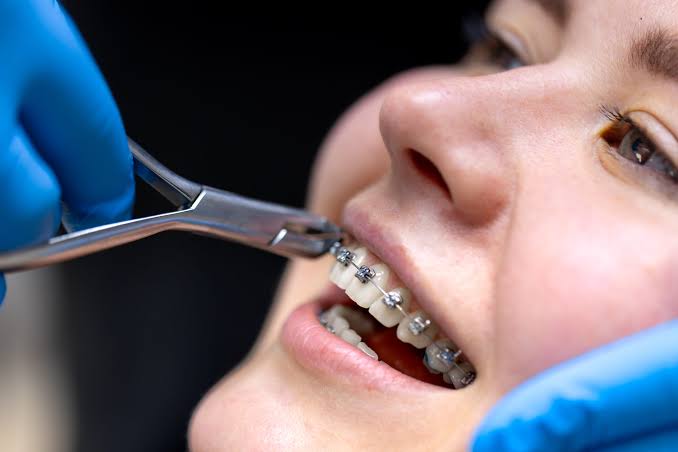
4. Orthodontic relapse
Let’s say you, or your child have already had orthodontic treatment:
You invest time and money into braces or aligners, teeth look beautiful…and then a few years later, things start to shift again.
Mouth breathing is a major risk factor for orthodontic relapse.
For long‑term stability, you need:
Tongue resting in the roof of the mouth
Lips closed
Breathing primarily through the nose
That natural tongue and lip posture acts like a built‑in, 24/7 retainer. If you or your child are mouth breathing going into ortho, it’s important to:
Address breathing patterns and tongue posture
Talk with the orthodontist about airway and myofunctional considerations
If airway and function aren’t on their radar at all, it might be worth considering whether they’re the right fit for your needs.
5. Speech
Mouth breathing also affects speech.
People who mouth breathe often have:
Lower muscle tone in the lips and tongue
A smaller, narrower oral cavity
Less space and control for precise movements
Clear speech needs:
Strong, coordinated movement of the lips, cheeks, and tongue
Room for the tongue to reach the palate
Smooth, quick transitions between sounds
If the space is tight and the muscles are weak or uncoordinated, articulation can be more challenging. Supporting nasal breathing and tongue posture often goes hand in hand with improving speech.
Signs to Watch for at Home
You don’t need special tools, just awareness. Over a few days, keep a mental (or physical) tally:
During the day:
Is my mouth (or my child’s mouth) open at rest?
Are the lips apart while watching TV, reading, or using a device?
Is the tongue resting low in the mouth instead of up against the palate?
At night and on waking:
Snoring or noisy breathing
Drooling on the pillow
Waking with a dry mouth or thirst
Morning headaches or jaw pain
Dark circles under the eyes
Restless sleep, frequent position changes
These are all red flags that mouth breathing may be happening, especially during sleep.
What Can You Do Next?
1. Talk to your dental team
Start by sharing your concerns with your dentist or dental hygienist. Some providers are very familiar with airway and myofunctional concerns; others may not have had much training in this area.
If they are informed and interested in airway health, they can help guide you. If they dismiss mouth breathing as unimportant, that may be your sign that your Dental provider is not up on current information and is not the right provider to support you with this journey. You don't have to switch dentist's necessarily, but you can look for outside support.
2. Consider your medical team
A pediatrician or ENT (ear, nose, and throat specialist) can be helpful, especially when it comes to:
Allergies
Chronic congestion
Enlarged tonsils and adenoids
However, many medical providers still see mouth breathing as a “minor” issue in the grand scheme of health. I see it differently. Breathing is the most fundamental thing our body does. We need it to survive, and how we breathe affects everything else.
3. See a myofunctional therapist
The best person to help “pull the pieces together” is often a myofunctional therapist.
Myofunctional therapists are specifically trained to:
Assess airway and breathing patterns
Look at how tongue posture, lips, jaws, and habits all interact
Identify what might be causing mouth breathing
Build a plan to correct it
Connect you with the right team members (ENT, orthodontist, allergist, etc.)
They won’t just look at one symptom in isolation, they’ll help you see the whole pattern and work toward lasting change.
How Myofunctional Therapy Can Help
At Grey Bruce Orofacial Myofunctional Therapy, our work is focused on:
Supporting nose breathing
Encouraging lip closure
Establishing a healthy tongue posture (up in the palate)
Training a proper swallow pattern
We use simple, targeted exercises twice a day that, over time, can make a big difference in:
Breathing
Sleep quality
Speech
Facial growth and oral function
Overall energy and how you feel in your body
You’re not crazy for noticing mouth breathing or wondering if it’s connected to what you’re seeing in your child or yourself. Your observations are important.
If you’re seeing patterns that concern you such as open lips at rest, snoring, dark circles, behaviour changes, reach out. You deserve answers, and your child deserves to breathe, sleep, and grow in the healthiest way possible.
You can send us an email with your questions or join our email list to stay updated on future blogs as we continue to explore mouth breathing, nasal health, and practical ways to support your family’s wellbeing.