


Symptoms
of OMD's (Orofacial Myofunctional Disorders)
Common conditions that clients present with that we provide rehabilitation for include:
Mouth Breathing
Breathing affects your quality of life
Our body was designed for nasal breathing, and the way we breathe affects our quality of life. If you can’t breathe well, you can’t sleep well. Poor breathing and sleeping patterns can adversely affect your mood, energy, focus and overall health.
If you are not breathing well, your body works harder to function. Our bodies are meant to rest and recover during our sleep, so if our sleep is disrupted then the body does not get a chance to properly restore itself.
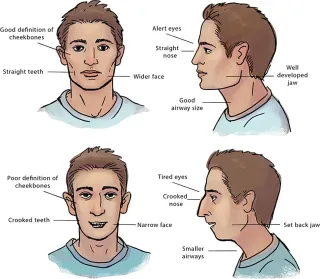
The nasal passage warms, filters and purifies air before entering the lungs. Mouth breathing bypasses this important step passing cold, unfiltered air into the body. This predisposes one to dry mouth, frequent colds, cough, and can affect dental health and facial development.
Do you breathe through your mouth?
Mouth breathing is when the jaw drops down to allow air in. This happens when we cannot get enough air in through our nose, so the mouth takes over. Mouth breathing can become a life long habit if not corrected, and can be detrimental to your health. When you mouth breathe, the tongue rests low in the mouth, the back of the tongue drops down and the airway becomes restricted. To compensate for a restricted airway, we position our head forward to allow more air to pass through. Over time this can lead to neck and shoulder tension, clenching or grinding, snoring and/or sleep apnea, TMJ pain, and anxiety or depression.
Impacts of Mouth Breathing on Our Body
• Changes in facial growth and development
• TMJ pain
• Crooked teeth
• Chronic fatigue
• Orthodontic relapse or longer time in treatment
• Snoring and/or Obstructive Sleep Apnea
• ADD/ADHA
• Poor Concentration
• Increased risk of dental decay and gingival disease
• Dry mouth and/or bad breathe
• Enlarged tonsils
• Anxiety and/or depression
• Digestive concerns: acid reflux, gas, indigestion
⇢ In adults, mouth breathing affects the level of oxygen concentration in the blood stream which can be associated with cardiovascular disease, high blood pressure, sleep apnea and other health concerns.
⇢ In children, mouth breathing has been linked to poor growth and weak academic performance, as well as ADD and ADHD symptoms and more.
How Can Mouth Breathing be Treated?
It may seem as simple as saying “close your mouth, breathe through your nose”, but as this bad habit continues the muscles of the face and mouth compensate and learn to work incorrectly. New patterns must be taught to retrain previous dysfunctional patterns. Through Myofunctional Therapy, we work to strengthen and re-train your muscles to help stop poor breathing patterns. When you switch from mouth breathing to nasal breathing, changes to your health and quality of life can be remarkable!
➡ GET AN EVALUATION FOR YOUR MOUTH BREATHING
Tongue Ties
What is a Tongue Tie?
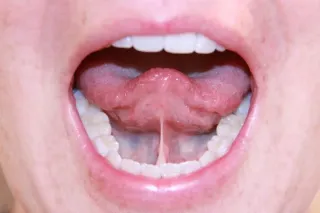
A tongue tie is a physical limitation in the mobility and function of the tongue. It is also commonly referred to as a restricted lingual frenum or tethered oral tissue (TOT). The frenum is the line or band of tissue directly under the tongue connecting it to the floor of the mouth. Everyone has this frenum, but for some people it develops too tight, or too short. If this occurs then it can restrict the movement of the tongue, as well as preventing it from resting in the correct place against the palate.
When a tongue tie is present, it can have a negative impact on oral development, oral function, speech, breathing and more.
Why does it matter?
Posture & Function.
When your tongue is in the right place, your teeth will grow in straighter and your face will develop properly.
A tongue tie also affects tongue position/posture, causing the tongue to rest low in the mouth. A low resting tongue is either a necessity or a habit and your Myofunctional Therapist must identify it as the symptom of something more important. An underlying health concern could include mouth breathing as a result of a tongue tie or low resting tongue. Mouth breathing perpetuates inflammation, tonsil/adenoid enlargement and nasal resistance.
A low tongue posture, regardless of the cause, can result in compensations to open up the airway by pushing the head forward, which can lead to chronic neck/shoulder tension, clenching, grinding and sleep apnea.
Both a low tongue posture and tongue tie can have long term effects involving the TMJ function and health, stability of dental occlusion development of the jaws, speech and articulation, a chronic open mouth posture, and of utmost importance: airway health!
Symptoms of a Tongue Tie
In Infants - Difficulty breast feeding or bottle feeding, painful latching, reflux, ear infection, poor weight gain and open mouth posture or mouth breathing
In Children - Gagging or choking on food, messy or noisy eating, picky eating, posture imbalances, delayed speech development, digestive issues, reflux, ear infections, teeth grinding, snoring/sleep disordered breathing, orthodontic needs or relapse, poor dental health and mouth breathing
In Adults - Chronic headaches or migraines, neck/shoulder pain, forward head posture, jaw pain, clenching and grinding, snoring and sleep apnea, orthodontic needs or relapse, digestive issues, reflux, poor dental health, mumbled speech, mouth breathing and narrow jaws
How can Orofacial Myofunctional Therapy help?
A low resting tongue posture, without a tie, can be retrained to rest in the roof of the mouth through myofunctional exercises. When a tongue tie is identified, myofunctional exercises may not be enough to retrain the tongues resting position. If this is the case, a simple procedure called a “frenectomy” to release the restricted frenum may be required. At Grey Bruce OMT, every client is screened for a tongue tie and then it is determined whether a frenectomy is recommended. It is important to know that a frenectomy is not needed for every person who has a tongue tie, but more important to identify if there are any symptoms because of the restriction. If required, we will refer you/your child to an experienced and skilled provider to perform the procedure.
Myofunctional Therapy is a critical part in a frenectomy procedure to allow for proper would healing and allow the tongue to return to its full function.
What is a Frenectomy?
A frenectomy is a simple incision at the bottom of the tongue to free the tongue from the floor of the mouth. The procedure is low risk and can be performed with a laser, scalpel, scissors or combination. In most cases, the procedure is done with only local anaesthetic - general anaesthetic is rarely used. Would healing usually takes 1-2 weeks, although it may take longer depending on the procedure and level of pre/post frenectomy care.
Pre/Post Frenectomy Care
Orofacial Myofunctional Therapy helps to ensure that your tongue tie release (frenectomy) is successful. When there is a tongue tie, the muscles of the tongue will not be properly used, so even after a frenectomy has been completed, there is risk of re-attachment. It is essential to prepare for the procedure by completing a series of exercises to rehabilitate the tongue and prevent the frenulum from healing back into its original place.
Tongue Thrust
What is a Tongue Thrust?
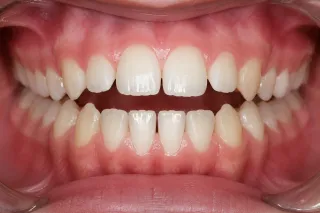
A tongue thrust is an incorrect swallowing pattern in which the tongue pushes forward against or between the teeth during swallowing, speaking, or even at rest. Rather than resting against the roof of the mouth, the tongue often sits low in the mouth or presses against the front teeth.
Tongue thrust is not simply a habit—it is often the result of underlying factors such as prolonged thumb sucking, pacifier use, mouth breathing, enlarged tonsils, allergies, tongue tie, airway restrictions, or improper oral development.
When a tongue thrust is present, it can have a negative impact on dental alignment, facial growth, speech, swallowing, breathing, and overall oral function.
Why Does it Matter?
The tongue is one of the strongest muscles in the body and exerts pressure on the teeth thousands of times each day through swallowing and speaking. When the tongue consistently pushes against the teeth rather than resting against the palate, it can influence the position of the teeth and the development of the jaws.
Tongue thrust is commonly associated with open bites, protruding front teeth, orthodontic relapse, and improper jaw development. Even after braces or orthodontic treatment, a tongue thrust can cause teeth to shift back out of alignment if the underlying habit is not corrected.
A tongue thrust is often accompanied by a low tongue posture and mouth breathing, both of which can contribute to poor facial development, narrowed dental arches, sleep-disordered breathing, and airway concerns.
Because the tongue is involved in swallowing, chewing, speaking, and breathing, an incorrect tongue posture can affect many aspects of health and function throughout life.
Symptoms of a Tongue Thrust
• Open bite or protruding front teeth
• speech difficulties (especially lisps)
• labored swallow
• difficulty swallowing pills
• messy eating
• mouth breathing
• difficulty keeping lips together
• orthodontic concerns
• thumb sucking history
• orthodontic relapse
• clenching or grinding
• facial muscle tension
• sleep-disordered breathing
How Can Orofacial Myofunctional Therapy Help?
Orofacial Myofunctional Therapy identifies and addresses the underlying causes of a tongue thrust. Through a customized therapy program, patients learn how to properly position their tongue at rest, establish a correct swallowing pattern, improve lip seal, and support healthy nasal breathing.
Therapy focuses on retraining the muscles of the tongue, lips, cheeks, and face to function properly and efficiently. This helps create lasting improvements in oral function and can support the stability of orthodontic treatment results.
Every patient is thoroughly evaluated to determine the contributing factors to their tongue thrust. If additional concerns such as airway restrictions, enlarged tonsils, allergies, or a tongue tie are identified, referrals may be made to appropriate healthcare providers for further evaluation.
By addressing the root cause rather than simply the symptom, Myofunctional Therapy helps establish healthy oral habits that support long-term function, development, and overall health.
Speech/Lisp
*It’s important to understand that Myofunctional Therapy and Speech Therapy are not the same thing.
Speech Concerns
Myofunctional therapy exercises can be considered a foundational treatment when approaching speech problems. If the muscles and tongue are not working properly, children and even adults can experience difficulty in producing certain sounds. Therefore, it makes sense to rule out any muscular involvement prior to beginning a speech therapy program. A lisp is the most common speech concern associated with myofunctional symptoms.
Lisping is a symptom that can often be associated with a tongue thrust and/or a mouth breathing habit.
Clients with a lisp often struggle to make the correct "S" sound.
Other specific sounds that are connected with having a low tongue or a tongue thrust are “T”, “D”, “N” and “L”.
These sounds require precise movement and placement of the tongue, which makes them challenging for those without fine control of their oral muscles.
A mouth breathing habit could impact the sounds “B”, “M” and “P” because they all require lip closure.
Orofacial Myofunctional Disorders (OMDs) that can impact speech include a low tongue posture, a tongue tie or a mouth breathing habit where there is lack of a proper lip seal. Mumbling, lack of clarity, low voice projection or a nasally voice could all be associated to a myofunctional disorder.
➡ GET AN EVALUATION FOR OMD RELATED SPEECH CONCERNS

Orthodontic Relapse
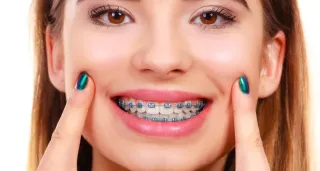
Orthodontic Support with Myofunctional Therapy
When it comes to braces, Orthodontists look at much more than just the position of your teeth. There are many factors that influence how straight our teeth come in and even the ability and effort it takes to straighten the teeth.
The Tongue
The tongue plays an important role in the development of your mouth and jaw, as well as shaping and guiding the position of your teeth. It is actually considered the natural expander for our jaw. When our tongue is resting high in the mouth, it provides an internal support for the upper jaw and teeth. When someone has a tongue thrust, tongue tie or a mouth breathing habit, the tongue will be resting at the bottom of the mouth, leaving no support for the developing jaw and teeth. At the same time, the tongue is constantly resting against the front teeth, and every time we swallow, the tongue will push forward or to the sides. This is what we call a tongue thrust. The constant pressure of the tongue against or between the teeth will not allow the teeth to bite together, often resulting in an open bite.
The lack of internal support, combined with the force of the tongue on the teeth can cause the teeth to move and alter the proper growth and development of the jaw. This can make it more difficult for your orthodontist to move teeth, close spaces, and can increase your risk of orthodontic relapse after braces are removed.
As an Orofacial Myofunctional Therapist, we work with Orthodontists to help eliminate habits that have attributed to the malocclusion (misalignment of the teeth) so that orthodontic treatment can be more efficient and long lasting.
A tongue thrust and mouth breathing habit can:
⇢ Make treatment generally more difficult for the orthodontist, because spaces are harder to close and teeth are more difficult to align from the forces of the tongue.
⇢ Slow down your orthodontic treatment, meaning that braces need to be worn for a longer period of time.
⇢ Increase the risk that your teeth move again after the braces are removed (relapse), which can lead to needing braces multiple times.
Orthodontics, Appliances and Myofunctional Therapy
When a tongue thrust is present, Orthodontists will acknowledge it as challenge to overcome when straightening the teeth and closing spaces. There are a number of oral appliances designed to control the tongue thrust during treatment, but most of these appliances are designed to block the habit, not retrain it. When the appliance is removed, the habit resumes and the risk for orthodontic relapse increases.
Orofacial Myofunctional Therapy is the best form of treatment to treat a tongue-thrust permanently, without the use of appliances. Progressive exercises work to retrain the oral and facial muscles to gain control over your tongue and eliminate the tongue-thrust habit. This form of treatment is successful for children and adults.
The ideal time to start a therapy program is before the braces are put on. However, myofunctional therapy can significantly improve the results of orthodontic treatment at any time, even when the braces are on the teeth.
Orofacial Myofunctional Therapy can help before or during orthodontic treatment to eliminate habits, improve results of braces and decrease your chances of orthodontic relapse.
➡ GET AN EVALUATION FOR ORTHODONTIC SUPPORT THROUGH MYO THERAPY
Oral Habits
Oral Habit Elimination
Thumb and finger sucking often starts early on lasting the first few years of life, and then some children will stop on their own. It is usually started to provide comfort or to soothe themselves. But oral habits such as pacifier use, sippy cups, thumb/finger sucking, nail biting or lip biting and lip licking extending for long periods of time can have a negative impact on jaw shape, teeth position, tongue placement, breathing and speech development.
This program is designed to help your child quit negative oral habits in a positive and interactive manner without the use of punitive and invasive appliances. It helps children build confidence and self esteem as they watch themselves give up addicting habits, typically within four weeks. We offer guidance and support to both the child and parents with an interactive program. Eliminating these habits is part of myofunctional therapy and the first step to restore functional growth and development.
⇢ Children as young as 4 years of age and up can work through the Oral Habit Elimination Program!
➡ GET AN EVALUATION FOR YOUR CHILD'S ORAL HABIT

Jaw Pain
Jaw Pain and Headaches
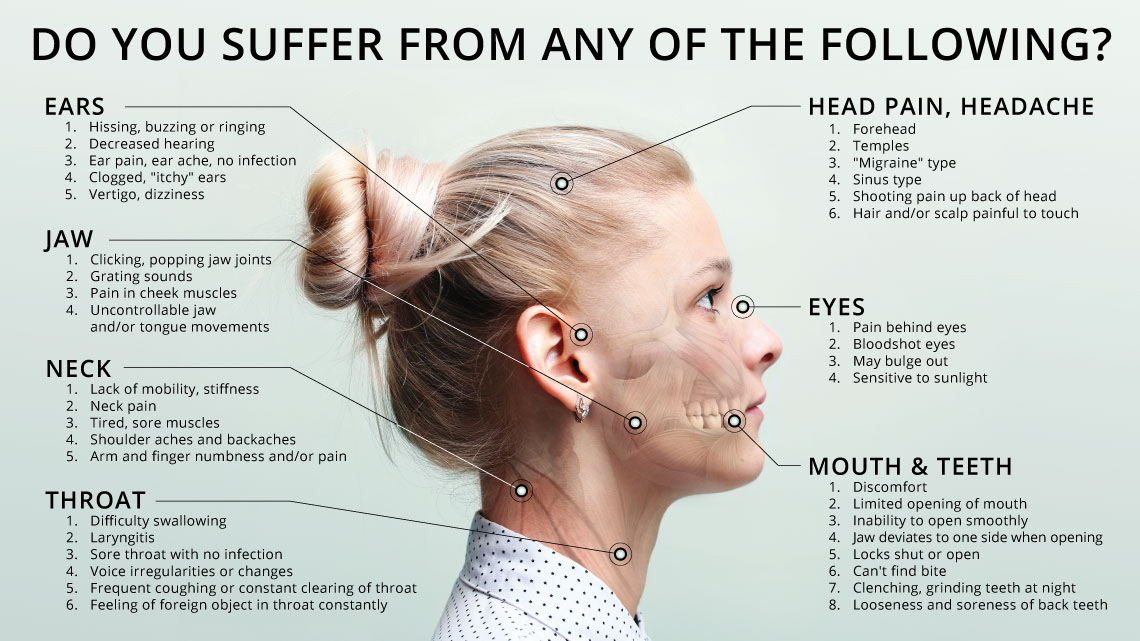
The TMJ (temporomandibular joint) is one of the more complex joints in the human body. It is durable and meant to last a lifetime, but unfortunately TMJ disorders are on the rise. There are many different ways to alleviate jaw pain, but one treatment modality may not work for everyone, so determining the root cause of symptoms should always be investigated. A large number of our orofacial muscles are connected to the joint to facilitate its movement, which is where Myofunctional Therapy comes in to play an important role in treating TMJ disorders.
How Can Myofunctional Therapy Help?
Orofacial Myofunctional Therapy (OMT) helps to treat jaw pain by focusing on improving the position of the tongue. A proper tongue posture is crucial for jaw stability and support, and helps to relax tense jaw muscles. When there is poor support for the TMJ, orofacial muscles compensate for what the tongue should be doing, resulting in tension. Tension in the orofacial muscles and jaw are significant factors in initiating headaches. A tongue tie or tongue thrust swallow pattern can also be closely related to TMJ symptoms and chronic headaches.
Studies show that Myofunctional Therapy can significantly decrease jaw pain and headaches if the underlying cause is related to the tongue and orofacial muscles.
Temporomandibular Disorders (TMD)
TMD refers to any pain, discomfort, dysfunction, or tension related to the jaw. Everyone is unique in why they experience jaw pain and headaches. Simple remedies such as massage, over-the-counter anti-inflammatories or hot/cold compresses may provide short term relief, but unless the root cause is addressed, the pain may become chronic and worsen over time.
Common symptoms of TMD include:
• Jaw and facial pain, tension, stiffness
• Pain and tension radiating in the neck, shoulders and upper body
• Earache
• Hearing difficulties
• Tinnitis (ringing in the ears)
• Headaches
• Toothaches
• Clicking, popping or grinding sounds when opening the mouth, yawning or chewing
• Clenching or Grinding of the teeth
• Difficulty opening the mouth wide or yawning
• Difficulty chewing
• Dizziness
• Jaw locking open
The Team Approach
Because the contributing factors involved can be so complex, managing and treating TMJ pain and other TMD symptoms often requires a skilled multi-disciplinary team.
Myofunctional Therapy is a great place to start because it is non-invasive and studies have shown that it can significantly decrease jaw pain and headaches, especially when the underlying issue is tongue and muscle related.
If needed, we will send a referral or recommend other healthcare providers with training in treating TMD, to help clients achieve the best results.
When the root causes are investigated and addressed using a multi-disciplinary approach, then real and substantial improvements over the long-term can be achieved.
➡ GET AN EVALUATION FOR YOUR JAW HEALTH
Snoring & Sleep Apnea
Do you get enough sleep?
You’re 8 hours of sleep at night may not always result in waking up refreshed. If you agree, this could be a sign of fragmented, or interrupted sleep patterns. Lack of adequate sleep can affect mood, energy, attention, judgement and memory to name a few. It can also affect anyone from infants to older adults. In the long term, chronic sleep deprivation can result in a series of health problems such as high blood pressure, obesity, diabetes, cardiovascular disease and more. Sadly, poor sleep and many of these symptoms seem common, including sleep apnea, but remember just because it’s common it does not make it normal.
Can you identify if you’re getting proper sleep or fragmented sleep?
Sleep Disordered Breathing
Sleep disordered breathing (SDB) includes a group of disorders characterized by abnormal respiratory patterns or insufficient ventilation during sleep. This includes Snoring, Sleep Obstructive Apnea and Upper Airway Resistance Syndrome (UARS). SDB affects sleep patterns, contributes to recurring daytime fatigue and exhaustion and puts strain on a persons nervous system and major organs.
Snoring & Sleep Apnea
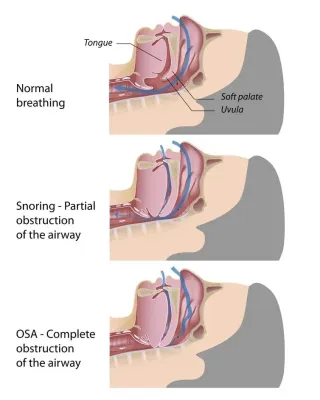
• For some people, the muscles in the back of the throat are weak and can collapse when laying back, disrupting the airway. When air flows past relaxed tissues, it causes them to vibrate resulting in the hoarse sound of snoring.
• Sleep apnea occurs when the muscles are weak also, but instead results in complete obstruction of the airway. Aside from the muscles of the throat, a weak tongue can also also fall back into the throat creating an obstruction. When the airway is blocked, breathing stops during sleep (apnea) and the body and brain are deprived from oxygen.
• A tongue tie or a low resting tongue are potential indicators of weak muscles and a compromised airway.
• Depriving the body and brain of oxygen can have detrimental health effects.
• ONLY medical doctors can diagnose sleep apnea.
Upper Airway Resistance Syndrome (UARS)
• Newly termed the “young, fit, female” version of sleep apnea
• Airway is not completely obstructed, but respiratory efforts are increased causing frequent arousals or awakenings
• These individuals are more likely to have low blood pressure, higher levels of anxiety and difficulty concentrating during the day.
• Often goes undetected because these individuals do not fit into the “typical” criteria for sleep disordered breathing
Adults and Sleep Apnea
Snoring and mouth breathing through the night can be early warning signs of obstructive sleep apnea. There are a few standard treatment modalities for sleep apnea including CPAP machines, oral appliances and surgery. Myofunctional Therapy has been shown to be a great alternative treatment to sleep apnea by reducing its severity and even increasing CPAP compliance.
Signs & Symptoms
• Snoring
• Headaches and/or jaw pain
• Clenching or grinding
• Waking with a dry mouth or throat
• Excessive daytime fatigue
• Hyperactivity
• Chronic mouth breathing
• Anxiety/depression/Mood changes
• Restless leg syndrome
• Choking/gasping during sleep
• Waking often to use the bathroom
In recent studies, Myofunctional Therapy has been shown to reduce apnea-hypopnea index (AHI) by approximately 50% in adults and 62% in children, improves daytime sleepiness and improves snoring.
Children and Sleep Apnea
Sleep apnea and other sleep disordered breathing (SDB) conditions can have serious health consequences in children such as oral and facial development, behavioural concerns and overall health. Many sleep specialists are using Myofunctional Therapy to improve breathing during sleep with the emergence of new studies linking ADD/ADHA to SDB.
Signs & Symptoms
• Snoring
• ADHD/ADD
• Hyperactivity
• Bed wetting
• Sleep walking
• Teeth grinding
• Restless sleep
• Delayed growth
• Mouth breathing
How Can Myofunctional Therapy Help?
In most cases of sleep disordered breathing, clients have weak and improperly functioning oral muscles. Through Myofunctional Therapy, we work to improve the tone of the soft palate, throat and back of the tongue to prevent and reduce the severity of snoring and sleep apnea. If you can strengthen those muscles, you can ease the symptoms and see many improvements in your sleep and overall health.
Do you or your child have a tongue tie?
It is recommended to monitor sleep patterns if a tongue tie is present, as it is a significant risk factor in the development of sleep disordered breathing.
➡ GET AN EVALUATION FOR A SLEEP DISORDERED BREATHING
Anxiety (Breathwork)
Why Does Breathing Matter?
Breathing is one of the few bodily functions that happens automatically but can also be consciously controlled. When we feel stressed, overwhelmed, or anxious, our breathing often becomes shallow, rapid, and chest-focused. This pattern signals the nervous system that a threat may be present, keeping the body in a heightened state of alertness.
Sometime we incorporate this shallow breathing into our norm. Breathwork helps interrupt this cycle by encouraging slower, deeper, and more efficient breathing patterns.
By intentionally changing the way we breathe, we can send a message to the brain that we are safe, helping the body shift from a state of stress into a state of calm.
The Connection Between Anxiety and Breathing
Anxiety and breathing are closely linked. Many people who experience anxiety unknowingly over-breathe. These habits can disrupt the body's natural balance of oxygen and carbon dioxide, contributing to symptoms such as dizziness, racing thoughts, chest tightness, fatigue, and feelings of panic.
Improving breathing patterns can help reduce these physical symptoms, making it easier to manage anxious feelings and respond more calmly to stressful situations.
How Breathwork Can Help
Breathwork teaches the body to breathe more efficiently and use the diaphragm effectively.
Regular practice can help:
• Calm the nervous system
• Reduce feelings of stress and anxiety
• Improve focus and mental clarity
• Decrease physical tension in the neck, shoulders, and chest
• Promote better sleep quality
• Improve energy levels throughout the day
• Increase resilience during stressful situations
Many people notice that they feel more grounded, centered, and in control after incorporating breathwork into their daily routine.
A Whole-Body Approach Breathwork is not about taking bigger breaths—it is about taking better breaths. By learning healthy breathing habits, individuals can improve not only their emotional well-being, but also their sleep, concentration, physical performance, and overall health.
Because breathing influences nearly every system in the body, small changes can have a powerful impact. Consistent practice can provide a simple, effective tool for managing anxiety and supporting long-term wellness.
➡ GET AN EVALUATION TO SEE HOW BREATHWORK CAN HELP YOUR ANXIETY

Do you have symptoms that myofunctional therapy could help?






*The information on this website is for educational and informational purposes only, and should not be used as medical advice, diagnosis or treatment.
Grey Bruce Orofacial Myofunctional Therapy
(226) 678-8640
[email protected]
📍Practicing within Hanover Physiotherapy & Sports Rehabilitation
140 7th Ave Suite 2, Hanover, ON N4N 2G9


Site designed and hosted by MyoBloom ©